

- Mettre en route la vidéo
- Cliquer sur l’icône « CC » (Sous-titre) en bas à droite
- Cliquer sur l’icône « Settings » (Paramètre) en bas à droite
- Cliquer sur «Subtitles » (Sous-titres)
- Cliquer sur « Auto-translate » (Traduire automatiquement)
- Sélectionner la langue de votre choix
Tri-Cities Urban Forest Working Group, Working to Preserve and Enhance Our Urban Forest
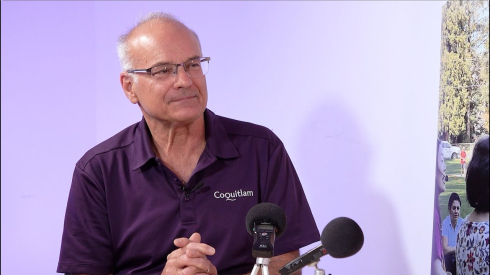
Grayson Barke of the Tri-Cities Urban Forest Working Group (TCUF) recently sat down with Nancy Furness (We’ve Got Issues) to discuss the significance and challenges of maintaining a healthy urban forest in Coquitlam and surrounding areas. The TCUF was formed by a group of concerned Coquitlam residents who are pushing for stronger measures to protect the city’s urban forest, viewing it as one of the most effective tools available to manage issues like urban heat, water, and flood control.
Grayson defines the urban forest as more than just trees—it encompasses all vegetation within the city, from shrubs to community gardens. He explains that the urban forest plays a critical role in cooling our neighbourhoods, managing stormwater runoff, reducing air and noise pollution, and promoting mental well-being. He points out that the presence of green spaces is linked to improved mental health, making it a crucial element in urban planning.
Key objectives for maintaining a healthy urban forest, according to Grayson, include ensuring “the right tree in the right place” and achieving “40% canopy coverage.” These goals, however, are under threat. Despite well-intentioned plans across municipalities and Metro Vancouver, recent data shows a worrying decline—Coquitlam alone has lost 7% of its canopy coverage. Grayson attributes this loss to fragmented approaches and a lack of long-term planning by some municipalities. He emphasizes the need for tree equity, ensuring that all neighbourhoods, regardless of socioeconomic status, have access to healthy tree cover.
The introduction of new provincial housing legislation (Bills 44, 46, and 47) has brought new challenges to urban forest conservation efforts. These bills prioritize increasing housing density and place restrictions on city bylaws, preventing them from “unduly restricting” new developments. As a result, TCUF’s focus has shifted toward advocating for robust forest management strategies in the Tri-Cities, while also organizing Urban Forest Forums to raise awareness about the implications of these legislative changes.
Grayson questions how the new legislation will allow for the development of vibrant, complete communities that can still support the health of both residents and the environment. He argues that effective urban planning should balance density with green spaces and that local governments must consider how urban forests can be integrated into future developments. The importance of public participation and collaboration with local organizations is another critical factor, as Grayson believes community involvement is key to driving positive change.
Looking forward, the TCUF plans to continue working closely with residents, municipal governments, and environmental groups to safeguard Coquitlam’s urban forest. By bringing these concerns into public discourse through events like the Urban Forest Forums, they hope to foster a collective understanding of the value of green spaces in the face of rapid urbanization.
Ajouter un commentaire

Tri-Cities Community Television est un organisme à but non lucratif situé à Coquitlam, Port Coquitlam et Port Moody, en Colombie-Britannique. Tri-Cities offre une formation en techniques de production médiatique et permet aux voix de la communauté de se faire entendre.
Médias récents

Face to Face with Councillor Nancy McCurrah: Practical Leadership for a Growing Port Coquitlam

Keeping the Community in Community TV
Coquitlam Mayor, Richard Stewart, Shares His Thoughts on Housing, Infrastructure and Homelessness

Commentaires
Nous encourageons les commentaires qui favorisent le dialogue sur les histoires que nous publions. Les commentaires seront modérés et publiés s'ils respectent ces lignes directrices:
Le portail des médias communautaires se réserve le droit de rejeter tout commentaire ne respectant pas ces normes minimales.