

- Mettre en route la vidéo
- Cliquer sur l’icône « CC » (Sous-titre) en bas à droite
- Cliquer sur l’icône « Settings » (Paramètre) en bas à droite
- Cliquer sur «Subtitles » (Sous-titres)
- Cliquer sur « Auto-translate » (Traduire automatiquement)
- Sélectionner la langue de votre choix
Strait Talk Ep. 60
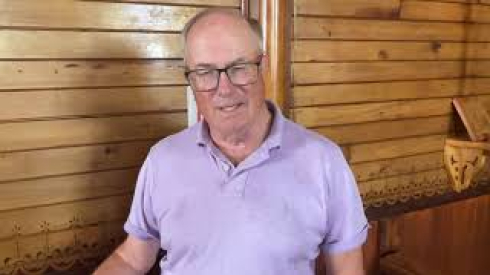
Michel Samson, former MLA for Richmond and one-time provincial Cabinet Minister, now practices law with Halifax-based firm Cox & Palmer. He recently sat down with Civic Journalist Jake Boudrot to discuss his current legal work and the broader implications it may have on fisheries policy across the region.
Samson is representing the United Fisheries Conservation Alliance in a legal case centred on the interpretation of the Moderate Livelihood Fishery — a term that has stirred considerable debate and controversy since it first entered the national conversation more than two decades ago. He opened the interview by explaining the role of the Alliance and the motivation behind launching this lawsuit.
According to Samson, the Alliance comprises commercial fishers and organizations concerned about sustainability, equity, and regulatory clarity in the fishing industry. The lawsuit seeks to clarify what exactly constitutes a "moderate livelihood" under Canadian law — a concept that stems from the landmark 1999 Supreme Court decision in R v. Marshall, which recognized the treaty rights of Mi'kmaq and Maliseet peoples to fish for a moderate livelihood.
When asked why this issue is still unresolved more than 20 years later, Samson acknowledged the complexity of the matter. He noted that, while many stakeholders have made efforts to implement interim policies and negotiate agreements, the lack of a firm legal definition has created uncertainty on all sides, particularly for harvesters, both Indigenous and non-Indigenous. “It’s about ensuring there are clear seasons, rules, and expectations,” Samson explained. “That way, everyone knows where they stand and how to operate safely and fairly within the fishery.”
The conversation then turned to the conflicts that have occurred in the absence of this legal clarity, including high-profile incidents like those in St. Peter’s Bay, which drew national media attention. When asked whether he believed the lack of definition contributed to such tensions, Samson acknowledged the challenges but emphasized that, in his view, the Moderate Livelihood Fishery has still yielded many positive outcomes. “There have been flare-ups, yes,” he said. “But overall, there’s been progress, and many Indigenous fishers have successfully established their operations. We just need the legal framework to catch up.”
He also made it clear that, in the view of the United Fisheries Conservation Alliance, no further fishing under the Moderate Livelihood model should proceed this year until the legal definition is finalized.
Samson wrapped up the interview by outlining the next steps in the legal process. He confirmed that the case is progressing and that the Alliance has been in recent discussions with officials from Fisheries and Oceans Canada in Ottawa. These meetings, he said, have focused on how to move forward constructively and ensure that future policy is built on a foundation of legal clarity and mutual respect. “The goal isn’t to shut anyone out of the fishery,” Samson concluded. “It’s to create a framework that works — one that’s fair, sustainable, and enforceable.”
As the legal challenge unfolds, all eyes will be on how the courts — and the federal government — respond. The outcome could shape the future of Atlantic Canada’s fisheries for years to come.
Ajouter un commentaire

TV TELILE est une station de télévision communautaire unique en Nouvelle-Écosse. Ils se trouvent sur le canal 10 à l'aide d'une antenne, le canal 4 sur le système de câble EastLink dans l'ouest du comté de Richmond et sur le canal 5 sur le système de câble Seaside dans l'est du comté de Richmond. Ils sont également sur le réseau câblé Seaside le long de l'est du Cap-Breton, de New Waterford et Glace Bay à Louisbourg et St Peters, et sont maintenant sur le système Bell Satellite sur le canal 536!
TELILE recherche les histoires, les réalisations et les scènes de notre quartier. Nous aimons également nous joindre à d'autres communautés dans l'histoire, la musique et la chanson. Que nous soyons à une remise de diplôme d'études secondaires, à un festival d'été, à des concerts, à de grandes vernissages, à des réunions du conseil municipal ou simplement à montrer la beauté de notre île, nous célébrons notre culture.
Médias récents

The Record Ep. 71

Strait Talk Ep. 70

The Record Ep. 70
Commentaires
Nous encourageons les commentaires qui favorisent le dialogue sur les histoires que nous publions. Les commentaires seront modérés et publiés s'ils respectent ces lignes directrices:
Le portail des médias communautaires se réserve le droit de rejeter tout commentaire ne respectant pas ces normes minimales.