


- Mettre en route la vidéo
- Cliquer sur l’icône « CC » (Sous-titre) en bas à droite
- Cliquer sur l’icône « Settings » (Paramètre) en bas à droite
- Cliquer sur «Subtitles » (Sous-titres)
- Cliquer sur « Auto-translate » (Traduire automatiquement)
- Sélectionner la langue de votre choix
Finding Stillness in a Fast-Paced World: An Exploration with Dr. Gary Irwin-Kenyon
In an era defined by rapid change and relentless activity, a new conversation is emerging about the power of stillness to reshape our understanding of life, aging, and even death. The inaugural episode of Pathways to Stillness on CHCO-TV featuring Dr. Gary Irwin-Kenyon and co-host Vicki Hogarth, serves as a call to action—urging communities to reclaim moments of quiet reflection amid the noise of modern existence.
Stillness as a Public Good
At its core, Pathways to Stillness presents stillness not as an abstract concept but as a vital resource, one that has become increasingly scarce in today’s hyper-connected world. Dr. Irwin-Kenyon describes stillness as a "quiet centre of peacefulness"—a state that exists beyond the clutter of thoughts and distractions.
“If we took away all our thoughts, emotions, activities, sensations—on and on—there would not be nothing,” he explains. “There would be stillness.”
Hogarth, bringing a civic-minded perspective, notes that the modern world prioritizes productivity over presence. “We live in a culture that values doing over being, overstimulation over peace and tranquillity,” she says. This conversation extends beyond personal well-being, touching on a broader social concern: how can communities foster environments where stillness is accessible to all?
Personal Pathways to Stillness
The discussion is grounded in personal experiences, reinforcing the idea that stillness is not a luxury but a necessity. Dr. Irwin-Kenyon recounts the story of a friend who finds solace in cycling along the shores of Minister’s Island, experiencing fleeting moments of pure presence.
Hogarth shares her own practice, explaining how her dog serves as an anchor to the present moment. “Having a dog has been my pathway to stillness because I have to be attentive to what she needs in the moment.” These examples suggest that stillness is deeply personal, yet universally necessary.
Reframing Aging and Change
One of the episode’s most profound discussions centres on aging. Too often framed as a process of decline, aging, according to Dr. Irwin-Kenyon, should be viewed as a narrative of growth, wisdom, and resilience.
“We need to push back against the negative metaphor of loss in aging,” he asserts. He encourages individuals and communities alike to adopt a broader perspective—one that sees aging as a journey rather than a slow erosion of vitality. This shift in thinking has implications for public discourse on elder care, retirement, and intergenerational relationships, suggesting that societies must move beyond outdated narratives of aging as mere deterioration.
Stillness as a Civic Practice
The episode also highlights Tai Chi as an accessible pathway to stillness, reinforcing the idea that stillness should not be confined to philosophical discussion but integrated into daily life. Dr. Irwin-Kenyon describes Tai Chi as a practice that promotes physical, cognitive, and emotional balance. “It helps you calm down, get more relaxed, and feel better about life and how you interact with others.”
The episode concludes with a demonstration of a simple Tai Chi movement, encouraging viewers to incorporate it into their routines. This act of sharing transforms the conversation from abstract theory into an invitation for engagement—an effort to make stillness a public priority rather than a private luxury.
The Civic Responsibility of Stillness
As the pace of life accelerates, the search for stillness becomes a crucial civic issue. Pathways to Stillness is more than a conversation; it is a reminder that communities have a responsibility to create spaces—both physical and psychological—where individuals can disconnect, reflect, and reconnect with themselves. From town planning that prioritizes green spaces to workplaces that encourage mindfulness, the implications are wide-ranging.
Ultimately, Dr. Irwin-Kenyon challenges us to rethink how we engage with time, aging, and the world around us. Stillness, as he suggests, is not an escape but a way forward.
Ajouter un commentaire

La télévision du comté de Charlotte est la seule source de télévision communautaire indépendante du Nouveau-Brunswick. Depuis 1993, CHCO-TV fournit au sud-ouest du Nouveau-Brunswick du contenu produit localement par la communauté qu'elle dessert.
La mission de CHCO-TV est de promouvoir les médias communautaires et d'encourager, d'éduquer et d'engager les résidents du sud-ouest du Nouveau-Brunswick, d'utiliser les nouveaux médias et la technologie, d'améliorer la participation civique, d'acquérir de nouvelles compétences médiatiques et d'améliorer la culture, l'économie, la santé et qualité de vie au Nouveau-Brunswick.
Médias récents

From Illness to Action: A Family’s Story Sparks a Community Movement

This Week Uncut on CHCO-TV: September 15-21, 2025
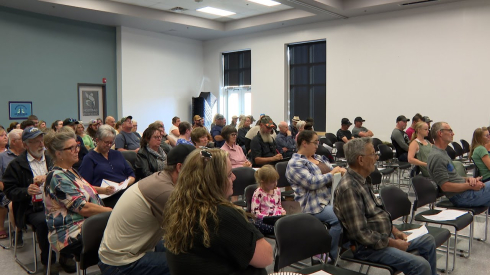
Residents Voice Concerns Over St. Stephen’s Draft Zoning Bylaw Z-4


Commentaires
Nous encourageons les commentaires qui favorisent le dialogue sur les histoires que nous publions. Les commentaires seront modérés et publiés s'ils respectent ces lignes directrices:
Le portail des médias communautaires se réserve le droit de rejeter tout commentaire ne respectant pas ces normes minimales.