

- Start playing the video
- Click CC at bottom right
- Click the gear icon to its right
- Click Subtitles/CC
- Click Auto-translate
- Select language you want
Bridging Gaps: Innovative Transportation Solutions in Southwest New Brunswick
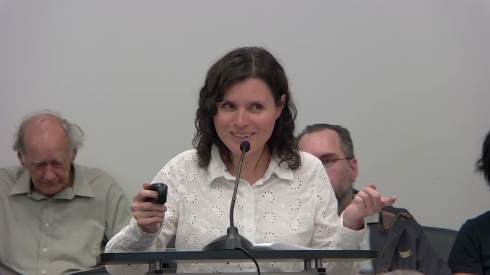
In the rural expanse of Southwest New Brunswick, innovative solutions are revolutionizing transportation, ensuring that residents without personal vehicles can access essential services such as healthcare, education, and employment. A recent roundtable discussion on Southwest Magazine on CHCO-TV, hosted by Vicki Hogarth, brought together key figures in the regional transportation landscape: Sharon McGladdery of Charlotte Dial-A-Ride, Briana Cowie of Eastern Charlotte Waterways (ECW), and Raymond Funk of the Southwest New Brunswick Service Commission. Their insights highlighted the collaborative efforts and diverse approaches being implemented to address transportation needs in Charlotte County, New Brunswick and beyond.
Community-Led Transportation Initiatives
Charlotte Dial-A-Ride has been a cornerstone of community transportation since its inception in 2005. "It was actually a Fundy Community Foundation initiative, which was a community survey of the needs that weren't being met in the community, and transport was front and centre of that," McGladdery explained. The service, now fully subscribed, boasts 23 volunteer drivers who provided over 8,000 rides in 2023 alone. Initially focusing on health appointments, Dial-A-Ride has evolved to meet the growing demand for transportation to work and educational facilities. Users access the service through a membership model, paying a nominal fee to connect with volunteer drivers.
Eco-Friendly Alternatives and Car Sharing
Complementing Dial-A-Ride's efforts, ECW's Project Village Car Share has introduced an environmentally friendly transportation option. Briana Cowie shared the project's origins and its impact: "We used a lot of Dial-A-Ride's data, as well as some collected data, which was wonderful for understanding where the gaps were currently, what the reliance was on their single-passenger vehicles within our region, and then looking at different ways to fill that gap." The car share service, which includes four electric vehicles, has seen significant uptake, especially among newcomers and students in St. Andrews. This initiative reduces greenhouse gas emissions and also provides a cost-effective transportation alternative for those without vehicles.
On-Demand Services and Future Expansion
Adding to the mosaic of transportation solutions is Kari, an Uber-like service launched by Future St. Stephen and recently expanded to St. Andrews. Raymond Funk highlighted Kari's role in the transportation ecosystem: "What it's doing is providing this on-demand taxi Uber-style service where folks who need a ride within a short time frame can call, see if there's a driver available, book that driver, and then get to their destination." This service fills the urgent need for immediate transportation, particularly in a region without traditional taxi services. Kari's model ensures drivers are well-compensated and vetted, providing a reliable and trustworthy service for residents.
Collaborative Efforts and Future Prospects
The roundtable discussion underscored the importance of collaboration among these transportation providers. McGladdery emphasized the complementary nature of these services, saying, "One of the bonuses we're already benefiting from with Kari is when we can't find a volunteer driver to meet a ride or somebody phones up 10 minutes before they need the ride, we can refer them now to Kari." This synergy ensures that residents can access the most appropriate transportation option for their specific needs, whether it's a scheduled ride with Dial-A-Ride, a self-driven electric vehicle from ECW, or an on-demand service through Kari.
Despite these successes, challenges remain. The need for reliable transportation to work and educational facilities continues to grow, and there are ongoing discussions about establishing fixed routes to better serve these needs. Funk pointed out, "Transportation and housing were identified [in a recent study] as some of the larger barriers for economic development and community inclusivity."
Add new comment

Charlotte County television is New Brunswick's only source for independent community television. Since 1993, CHCO-TV has been providing Southwest New Brunswick with locally-produced content made by community it serves.
The mission of CHCO-TV is to promote community media and to encourage, educate and engage residents in Southwestern New Brunswick, to use new media and technology, to improve civic involvement, learn new media skills and enhance the culture, the economy, health and quality of life in New Brunswick.
Recent Media

From Illness to Action: A Family’s Story Sparks a Community Movement

This Week Uncut on CHCO-TV: September 15-21, 2025

St. Andrews Council Votes Against Going Ahead With Wharf Refurbishment
We encourage comments which further the dialogue about the stories we post. Comments will be moderated and posted if they follow these guidelines:
The Community Media Portal reserves the right to reject any comments which do not adhere to these minimum standards.