


- Mettre en route la vidéo
- Cliquer sur l’icône « CC » (Sous-titre) en bas à droite
- Cliquer sur l’icône « Settings » (Paramètre) en bas à droite
- Cliquer sur «Subtitles » (Sous-titres)
- Cliquer sur « Auto-translate » (Traduire automatiquement)
- Sélectionner la langue de votre choix
New Brunswick Calls for Outside Help as Wildfires Escalate
New Brunswick is in the grip of its second-worst wildfire season on record, as weeks of drought and unrelenting heat fuel blazes across the province. Officials reported 15 active fires this week, with four classified as out of control — a stark reminder of how quickly conditions can escalate when forests are tinder-dry.
For the first time, the province has been forced to call in firefighting resources from outside its borders. Support has arrived from neighbouring Nova Scotia and Prince Edward Island, as well as across the international boundary from the state of Maine. The decision underscores the unprecedented scale of the challenge and the growing need for regional cooperation.
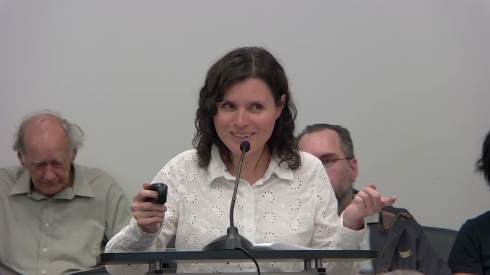
“We understand in the moment that there are four out-of-control wildfires,” said Nathalie Sturgeon, co-anchor of CHCO-TV’s This Week Uncut. “For the first time in the history of New Brunswick, they’ve actually brought in resources from outside of the province.”
The severity of the crisis has prompted officials to tighten evacuation timelines. Families who might once have had 30 minutes to leave their homes are now being warned they may have only five to ten minutes to act. Emergency management officials are urging residents to keep go-bags stocked with food, water, flashlights, batteries, medications, and important documents. “It can happen in seconds,” Sturgeon emphasized, noting how fast flames can jump from treetops to neighbourhoods when winds shift.
At a press conference, Premier Susan Holt praised New Brunswickers for heeding warnings and adjusting their behaviour to lower fire risk. “We are really seeing New Brunswickers come together and do this as a collective activity,” she said, pointing to voluntary reductions in backyard bonfires, ATV use, and other fire-prone activities. Holt stressed that prevention remains the province’s strongest defence, given the sheer strain on firefighting crews.
The wildfires have also reignited debate over long-standing forest management practices. Forestry experts note that 99 percent of the province’s fires are human-caused, sparking questions about industry operations, clear-cutting, and replanting strategies that may leave the landscape more vulnerable. Officials acknowledged that the balance between hardwood and softwood species is under review, but cautioned that the immediate priority must remain on suppressing active fires.
On the ground, the response has extended beyond government directives. Local businesses and residents have stepped in to supply food, water, and fuel, while volunteers have offered equipment and labour. Ron Fournier, a helicopter operator, suspended regular flights to remain on standby for firefighting assistance. Stories like his illustrate how tightly knit communities rally during emergencies, even as the crisis drags on.
Provincial authorities continue to urge residents to monitor the FireWatch website for up-to-date advisories, fire bans, and safety recommendations. Officials warn that vigilance and cooperation are essential to navigating a wildfire season already straining resources at every level.
New Brunswick’s struggle reflects a broader trend across the Maritimes — a region once relatively shielded from wildfire devastation but now increasingly vulnerable as climate change drives hotter, drier summers. Experts caution that fires of this scale are likely to become more frequent and more destructive. How the province adapts — through stronger policy, revised forestry practices, and sustained community action — may help determine whether future fire seasons can be contained or whether they will overwhelm the system again.
Ajouter un commentaire

La télévision du comté de Charlotte est la seule source de télévision communautaire indépendante du Nouveau-Brunswick. Depuis 1993, CHCO-TV fournit au sud-ouest du Nouveau-Brunswick du contenu produit localement par la communauté qu'elle dessert.
La mission de CHCO-TV est de promouvoir les médias communautaires et d'encourager, d'éduquer et d'engager les résidents du sud-ouest du Nouveau-Brunswick, d'utiliser les nouveaux médias et la technologie, d'améliorer la participation civique, d'acquérir de nouvelles compétences médiatiques et d'améliorer la culture, l'économie, la santé et qualité de vie au Nouveau-Brunswick.
Médias récents

From Illness to Action: A Family’s Story Sparks a Community Movement

This Week Uncut on CHCO-TV: September 15-21, 2025

St. Andrews Council Votes Against Going Ahead With Wharf Refurbishment


Commentaires
Nous encourageons les commentaires qui favorisent le dialogue sur les histoires que nous publions. Les commentaires seront modérés et publiés s'ils respectent ces lignes directrices:
Le portail des médias communautaires se réserve le droit de rejeter tout commentaire ne respectant pas ces normes minimales.