


- Mettre en route la vidéo
- Cliquer sur l’icône « CC » (Sous-titre) en bas à droite
- Cliquer sur l’icône « Settings » (Paramètre) en bas à droite
- Cliquer sur «Subtitles » (Sous-titres)
- Cliquer sur « Auto-translate » (Traduire automatiquement)
- Sélectionner la langue de votre choix
Neepawa Media Heads Talk about the New Online News Act and Why the Media Giants are Dropping Canadian News
Bill C-18, known as the Online News Act, went into effect in June. The Bill requires tech giants such as Meta and Google to pay Canadian publishers for news content on their sites if they’re making money off it. In response to this bill, Meta, which owns Facebook and Instagram, has indicated that they will begin limiting access to Canadian news content for Canadian users. NACTV’s Facebook content has already been blocked.
Host Don Walmsley asks guests Ken Waddell of the Neepawa Banner & Press and Bill Syrik of NACTV and Creation Station to give their perspectives on the bill, its impact on the Neepawa area, and the state of local news.
Discussion about online news content within the Canadian government is nothing new. Ten years ago, says Waddell, he was invited to Ottawa to speak before the Parliamentary Standing Committee on Canadian Heritage about his experiences with local media. In that era, which saw the emergence of the phrase “fake news”, Waddell talked about the reliability of local sources. As he says, “In a local newspaper, if you make a mistake, you’re going to hear about it by 9 o’clock the next morning.” On further explanation of the happenings at the standing committee, Waddell says that he was followed by the then-head of Facebook Canada and as Waddell recalls it, Heritage Canada asked him, “How can you assure the people of Canada and this Committee that your news will be as reliable as Mr Waddell’s?”
Canadian Heritage went on to develop a number of programs to assist the media and attempt to preserve the news industry in Canada, including the Local Journalism Initiative. Ten years on from that conversation, Facebook is open season, as Waddell says, with anyone able to post anything with little to no accountability.
Facebook, Google, and others, notes Waddell, pay very few taxes in Canada so most of the money they make off Canadian content is leaving the country. He says he agrees with the sentiment of the bill, if not necessarily the particulars, and that the big companies are benefiting from the hard work that the media outlets, large and small, are putting into gathering the news and should be reimbursing them in some way.
Syrik adds that the Facebook and Instagram response in particular may have a stronger effect on younger generations who are more entrenched in social media and aren’t used to going to the original sources for their news content.
What’s different about Bill C-18 as opposed to similar laws proposed in other countries such as Australia, says Syrik, is that Canada is the first country to put it into law. As such, Canada is now something of a test case and the response is being closely watched by both sides. In global terms Canada is small potatoes, but companies are concerned that larger economies such as the United States, EU, China, or India will follow.
What many people may not know, adds Waddell, is that prior to C-18, Facebook and Google had one-on-one deals with several corporate news entities which overall amounted to several million dollars, but these deals did not include the smaller papers or independent media. Those deals have all now been cancelled.
Question: What is the impact of Facebook and Google’s decision on us locally?
Waddell and Syrik agree that small towns are actually better off because they are more likely to get their news more directly from local sources.
Question: What can we the public do to ensure that we can still find local news?
Walmsley notes that NACTV’s news content can be found on their website at nactv.tv. Waddell suggests that viewers can go directly to their local newspaper or radio station but also, if they want to stick with social media, to count on contacts they know are reliable, such as local businesses. He adds again that local media is held to account much more than big companies and that “people know where to find me or Bill if we step out of line.”
Below are some questions asked:
Question: What can we do to ensure the reliability of our news sources and weed out the fake news?
Waddell encourages viewers to do their due diligence and know what the source of their news is. You have to build trust within your audience, as he has with 30 years in the newspaper business, and reputation matters. Both men agree that it’s important to get local news locally. Fake news, says Waddell, will always be there and may become more prevalent. People have the freedom to say whatever they like, but as their audience “you have the privilege and the obligation to turn it off.” The 24-hour news cycle, they say, means a lot of recycling of news stories and a pressure to always have something to say.
Question: Do you think it's more likely that Facebook and Google will pay up or Canada will back down?
Syrik says that Canada has taken a hard stance by putting Bill C-18 into law and it’s unlikely that they will back down now. He compares it to a royalty payment structure for musicians, where the people who make the product receive a portion of the earnings of the people who make money off it.
Question: Do you think Neepawa will see any of that money?
Speaking from the perspective of print journalism, Waddell indicates that News Media Canada with its over 500 members, including the Neepawa Banner & Press, have made an application to be part of a bargaining group with the big corporations to come to an agreement. And while he says that if the government changes there is the possibility that the bill will be retracted, the more likely outcome is that eventually an agreement will be reached.
Question: Who do the public contact to make their opinion on C-18 known?
Members of the public are encouraged to contact their local government representative and also the CRTC who is soliciting feedback on the bill. Waddell suggests that contacting Facebook or Google directly will not likely get as much traction.
In closing, Waddell believes that while we’re going through some painful adjustment right now, in the long run it will only hurt Facebook and Google to force Canadians to seek out other avenues for their news content and the longer they do it, the less likely people are to come back.
Ajouter un commentaire

As Neepawa and area’s local access television station, NACTV has been serving the community since 1977. The station is a community-owned not-for-profit organisation that broadcasts 24 hours a day and reaches homes throughout Manitoba and Canada on Bell ExpressVu 592, MTS Channel 30/1030, and WCG 117 as well as streaming online at nactv.tv.
NACTV’s content is primarily filmed and produced by local volunteers and focuses on issues, activities, achievements, sports, and news by, about, and of interest to our community.
Neepawa is located in western Manitoba, about two hours west of Winnipeg and 45 minutes southeast of Riding Mountain National Park.
Médias récents
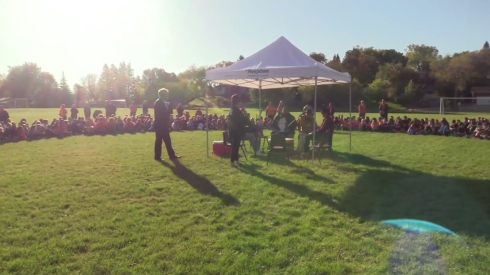
Celebrating Indigenous Culture Day 2025 in Neepawa
Concerned Citizens Reach Out About Sale of Municipal Office

Volunteer Fair Showcases Local Opportunities in Neepawa


Commentaires
Nous encourageons les commentaires qui favorisent le dialogue sur les histoires que nous publions. Les commentaires seront modérés et publiés s'ils respectent ces lignes directrices:
Le portail des médias communautaires se réserve le droit de rejeter tout commentaire ne respectant pas ces normes minimales.